Customer service remains the #1 cost for SMBs in APAC. A single agent in Singapore costs SGD 2,400–3,200/month fully loaded (based on Singapore Ministry of Manpower benchmarks for entry-level CS roles including CPF). An AI voice agent handling the same call volume costs SGD 200–400/month in infrastructure, though this figure assumes you're still retaining 0.5–1 FTE human staff for escalations and special cases.
The real economic win isn't replacement; it's deflection. If an AI agent successfully handles 70% of routine inquiries without escalation (rates vary by industry and knowledge base quality), you're looking at 50–70% cost reduction in support operations, accounting for retained staff and monitoring overhead. In the best cases, high-deflection industries like e-commerce or password resets, savings approach 80–90%, but this isn't typical.
Why voice agents matter for SMBs right now
Why now matters:
- Natural conversation is finally viable. Modern LLM voice stacks achieve 150–500ms end-to-end latency depending on architecture (self-hosted vs. cloud, codec choice). This is acceptable for most customer interactions.
- Free inbound channels. WhatsApp calling is free for incoming calls. WebRTC embedded in your website is free. You only pay per-call if you initiate outbound contact.
- Deployment has clear phases. A structured partner-led evaluation (requirements, demo, sign-off) takes 3–5 days. A production deployment handling customer traffic safely, with load testing, compliance audit, escalation workflows, and staff training, requires 4–6 weeks.
- Open-source is production-ready. Whisper (STT), Llama 3.1 or Claude Haiku (LLM), and Kokoro (TTS) can run on modest hardware for low-volume pilots. Production setups require proper sizing and load testing to handle your target concurrency without needing expensive enterprise platforms.
When voice agents deliver ROI: Three business scenarios
Scenario 1: Tier-1 Support Deflection
The problem: E-commerce retailer processes 300 orders daily. 5% trigger support inquiries (order status, refund requests, shipping issues). That's 15 support calls/day × 22 workdays = 330 monthly conversations, most routine and repetitive.
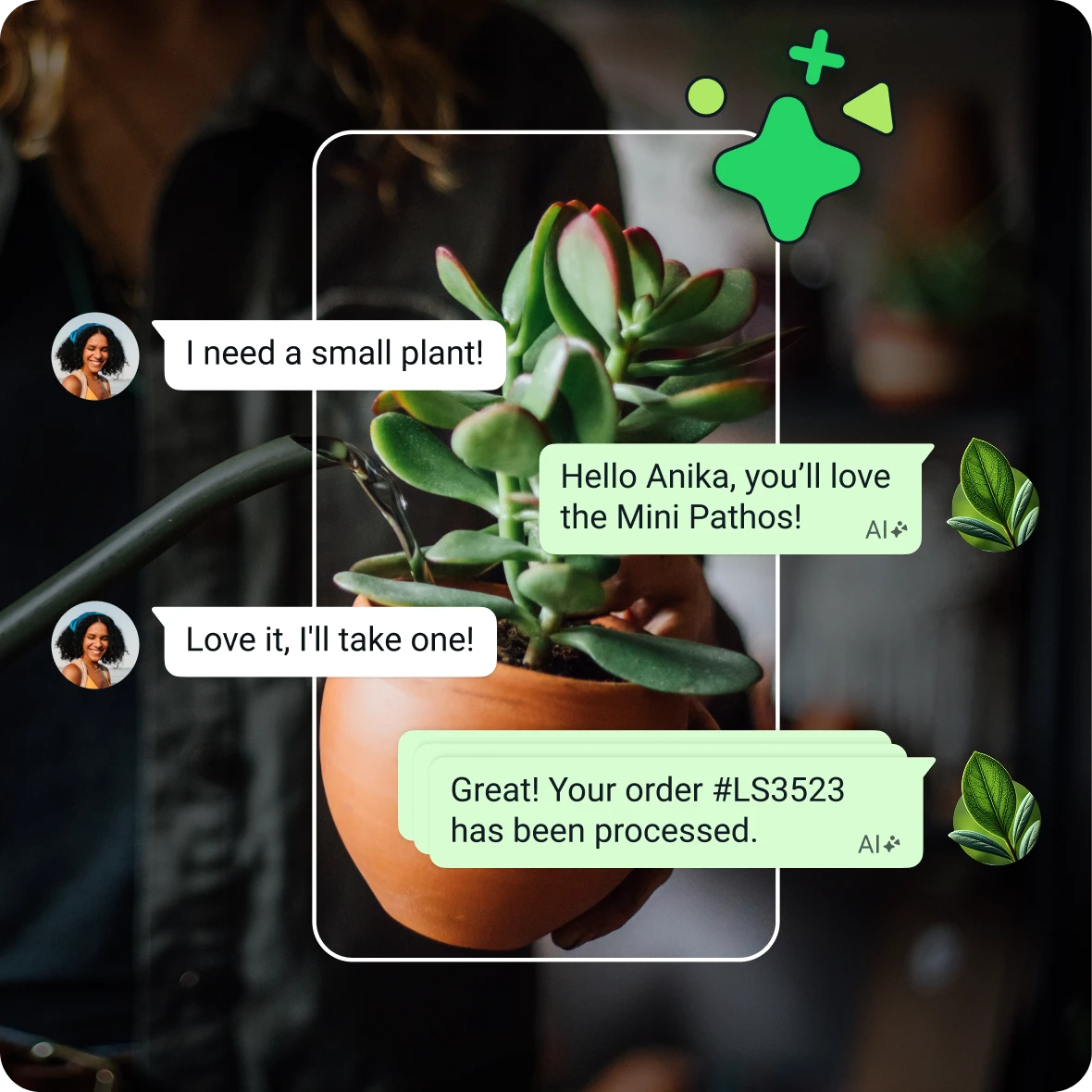
What a voice agent changes: Customers call WhatsApp. The agent verifies the order (pulls from your order system), checks status, and resolves 70% of cases immediately,refund approvals, reshipment authorization, tracking updates. Complex cases (damaged goods, warranty disputes) escalate to human agents with full context already captured.
Business impact:
- Setup cost: ~SGD 1,000–1,500 (one-time)
- Monthly cost: ~SGD 300–400 (infrastructure + minimal LLM)
- Headcount impact: 1 FTE deflected to higher-value work (proactive outreach, customer retention)
- Payback period: 3–4 weeks
- Margin lift: 8–12% improvement in support margin
Scenario 2: After-Hours Availability & Lead Capture
The problem: Professional services firm (tax/legal/audit) operates 9–5. Clients call outside hours, get voicemail, often don't call back. Missed appointments = lost deal momentum.
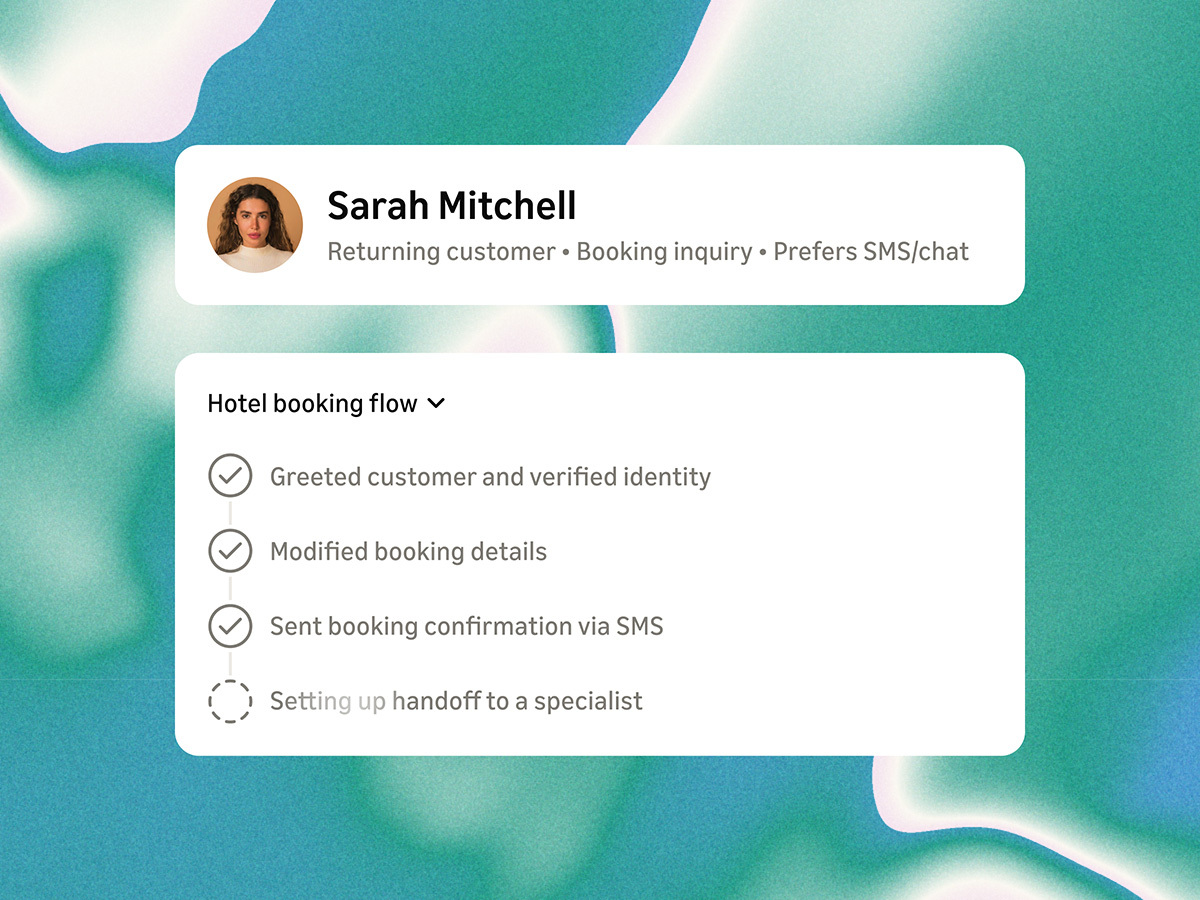
What a voice agent changes: After hours, inbound calls route to a voice agent (via website or WhatsApp). The agent asks clarifying questions, captures intent, schedules the next working day, and sends confirmation SMS. No missed leads; no voicemail tag.
Business impact:
- Setup cost: ~SGD 1,500–2,000
- Monthly cost: ~SGD 400–500
- Lead recovery: Capture 10–15% of after-hours calls as booked appointments
- Revenue upside: 2 extra appointments/week @ SGD 2,000–8,000 per appointment = SGD 4,000–16,000/month revenue upside
- ROI: Positive within 1–2 weeks
Scenario 3: Outbound Lead Qualification
The problem: Real estate agency manages 100 active listings. Weekly outbound to recent property viewers: "Have you found your perfect home yet?" Currently requires 2 FTE making calls at ~$2–3/call (wages + overhead).
What a voice agent changes: Automate outbound calls. The agent qualifies intent ("still looking?" → yes/no/maybe), captures motivation, and schedules showings for serious prospects. Agents focus on negotiation and relationship, not lead screening.
Business impact:
- Setup cost: ~SGD 1,500–2,000
- Monthly cost: ~SGD 500–600
- Call volume: 300–500 automated calls/month (vs. 100 manual)
- Cost per qualified lead: SGD 2–5 (vs. SGD 25–50 manual)
- Payback: 2–4 weeks
Real-world economics: What it costs and what you save
The published "cost per call" varies wildly depending on who's marketing to you. Managed platforms cite $0.08–0.15/call. DIY builders cite $0.007–0.015/call. Enterprise vendors cite $0.30+/call. All are correct for their architecture,but they hide the real question: what does deployment cost your organization?
Realistic cost model for a 10-person support team (typical SMB, up to 50 concurrent users):
- Current state: 10 support staff @ SGD 2,600/month = SGD 26,000/month
- With AI handling 70% of call volume: 3 experienced resources (trained for escalations and complexity) @ SGD 3,120/month each (20% premium for expertise) + SGD 300–500 infrastructure = SGD 9,860/month
- Realistic savings: SGD 16,140/month (64% reduction)
- Deployment investment: ~SGD 25,000–60,000 (SI scoping, design, knowledge base audit, platform configuration, staff training, parallel run validation)
- Payback timeline: Cost recovery in 2–4 months from savings; 12–18 month full ROI after accounting for deployment investment
Why the economics work: You're not eliminating headcount,you're redeploying it. The 3 retained staff handle complexity, exceptions, and escalations. They're more experienced (higher pay), but the math still wins because AI deflects routine volume. In smaller teams (2–5 people), savings are lower because you can't reduce headcount much; the deflection benefit pools toward other work (retention, upselling).
From POC to production: What to expect
3–5 day POC (Proof of Concept): Partner-led evaluation with your team. This answers "does this concept solve our problem and what's the realistic effort?"
- Day 1: Requirements workshop. Map your top 50 support tickets. Define core intents (5–10). Scope platform choice (WhatsApp, website, or SIP).
- Day 2: Build & demo. Partner configures a working demo with your top 3 use cases. Internal testing with your team.
- Day 3: Evaluation & decision. Measure resolution rate on test calls. Define success metrics. Sign-off to proceed or refine approach.
- Outcome: Yes/no decision and rough scope for production. If yes, move to deployment with full planning.
4–6 week production deployment: Real traffic, compliance, monitoring, staff integration. This is where voice agents become operational.
- Week 1–2: Detailed knowledge base audit & preparation. Map top 100+ support tickets to 20–40 intents. Configure system prompts and escalation logic.
- Week 2–3: Platform hardening & compliance. Load testing, infrastructure scaling. Compliance review (PDPA, call recording, consent disclosures, data residency).
- Week 3–5: Integration & staff training. Connect to CRM, ticketing, and knowledge systems. Train your team on their new role (handling escalations and complexity, not routine volume). Run full parallel test (agent + human) for 1–2 weeks to validate handoffs and escalation paths.
- Week 5–6: Phased cutover & monitoring. Start with 20% call volume, ramp to 100% over 1–2 weeks. Monitor metrics daily; adjust system prompt and routing as needed.
What you need from your team: 1 technical lead (infrastructure, LLM tuning), 1 product owner (intent design, escalation logic), and your support leadership (workflow redesign). This is 20–30% of their time for 5 weeks, not full-time effort.
Key metrics to track
| Metric | Target | Why It Matters |
|---|---|---|
| Resolution Rate | 60–75% | Percentage of calls fully handled without escalation. This directly drives your ROI. |
| Escalation Rate | 25–40% | If >50%, your knowledge base is incomplete or intent routing needs work. Actionable signal for improvement. |
| Response Latency | < 500ms | Longer delays feel unnatural; customers get impatient and hang up. |
| Cost Per Call | < SGD 0.50 | Total cost per call (STT + LLM + TTS + infrastructure). Validate against human cost. |
| Customer Satisfaction | 3.5+/5 | Post-call NPS or sentiment. Judge the agent against its own standard, not against humans. |
| First-Contact Resolution | 60%+ | Issues fully resolved in one call without follow-up or callback. Strong indicator of knowledge base quality. |
Common pitfalls to avoid
1. Unprepared LLM,Most failures happen because the LLM doesn't know the answer. Before launch, audit your top 100 support tickets and map them to 15–25 intents.
2. No escalation path,If the agent can't help, what happens? Always have a fallback: transfer to human, create ticket, or offer alternative channels.
3. Latency kills UX,If end-to-end latency exceeds 1 second, the caller feels awkward. Monitor latency at each layer and optimize STT, LLM, or TTS accordingly.
4. Multilingual drift,If your agent is trained on English data but customers speak Singlish or Tamil, accuracy drops 10–20%. Use Whisper (multilingual) and localize your LLM prompt.
5. Compliance & privacy,Voice calls are highly regulated. Inform customers they're talking to an AI, record calls securely, and don't store PII in logs unless necessary.
Why you need a deployment partner
The real work in deploying an AI voice agent isn't the technology,it's the organizational change. Every deployment, regardless of platform choice, requires knowledge base design, escalation workflow redesign, staff retraining, compliance validation, and production tuning. This is why no business successfully deploys voice agents alone.
What an SI partner handles that you can't DIY:
- Scoping the right solution. Is this a WhatsApp inbound play? Outbound for lead gen? Website widget for after-hours? Each has different economics and effort. A partner maps your actual use case, not the one that sounds good in theory.
- Knowledge base preparation. Auditing your top 100 support tickets, mapping them to 20–40 intents, and writing system prompts that reflect your business logic,this takes 40–80 hours and defines whether the agent succeeds or fails.
- Compliance & data residency. PDPA call recording, consent disclosures, data localization, audit trails,partners have playbooks; you'd spend weeks learning.
- Escalation workflow design. How does the agent know when to escalate? What happens to that escalation? How does your CRM get updated? Partners have templates from 20+ deployments; you'd reverse-engineer this through trial and error.
- Staff training & role redesign. Your support team's job changes from answering routine calls to handling complexity. Partners facilitate that conversation and training; you'd waste a month figuring it out internally.
- Production tuning. The first month after launch, the system prompt needs constant refinement based on real call data. Partners do this; internal teams typically miss it.
Platform choice (managed vs. custom) is secondary. Webex AI Agent, Twilio, Sierra, or custom-built,the deployment work is the same. The SI's job is the same either way: design, build, validate, and optimize. Choose your platform for feature fit and cost; choose your partner for execution and post-launch support.
Conclusion: Get started, but get the right partner
Voice agents solve real problems for SMBs: they deflect routine volume, capture after-hours leads, and automate repetitive outreach. The technology is ready (60–75% resolution rates on well-prepared use cases), the cost is accessible (SGD 300–500/month ongoing), and the ROI is measurable (cost recovery in 2–4 months for a 10-person team).
But deploying a voice agent requires more than buying a platform license. It requires scoping, knowledge base design, workflow integration, staff retraining, compliance validation, and production tuning. This is why successful deployments have a partner guiding them,not because the technology is hard, but because the organizational work is substantial and the mistakes are expensive.
The path forward: Pick one high-impact use case (Tier-1 deflection, after-hours capture, or lead qualification). Engage a deployment partner for a 3–5 day POC to validate the approach. If the business case holds, commit to a 4–6 week implementation. The partner handles platform setup and tuning; you handle the internal change management. Measure resolution rate, escalation rate, and cost per call from month one. Optimize based on real customer interactions.
That's how voice agents pay for themselves,and why having an experienced partner matters.
Sources
WhatsApp & Regional Data:
- WhatsApp penetration in Singapore: Statista, 2025
- Singapore salary benchmarks: Ministry of Manpower (MOM), 2024
Technical Resources:
- Whisper documentation: OpenAI API reference
- Kokoro open-source TTS: huggingface.co/hexgrad/Kokoro-82M
- Llama 3.1 specs: github.com/meta-llama/llama-models
- Best open-source self-hosted TTS models comparison: Pinggy Blog, July 2026
Industry Guidance:
- NextLevel AI: Voice AI trends and deployment patterns
- Aircall: SMB adoption and cost comparison data
- Respond.io: WhatsApp Business Calling API integration patterns
- WebRTC.ventures: WebRTC integration for voice applications
- AssemblyAI: Speech-to-text technology comparisons
- Softcery: AI voice agent cost modeling
Note on pricing: Pricing figures are current as of August 12, 2026. API rates change frequently. Verify with vendor pricing pages before implementation. Batch pricing and volume discounts may apply.